
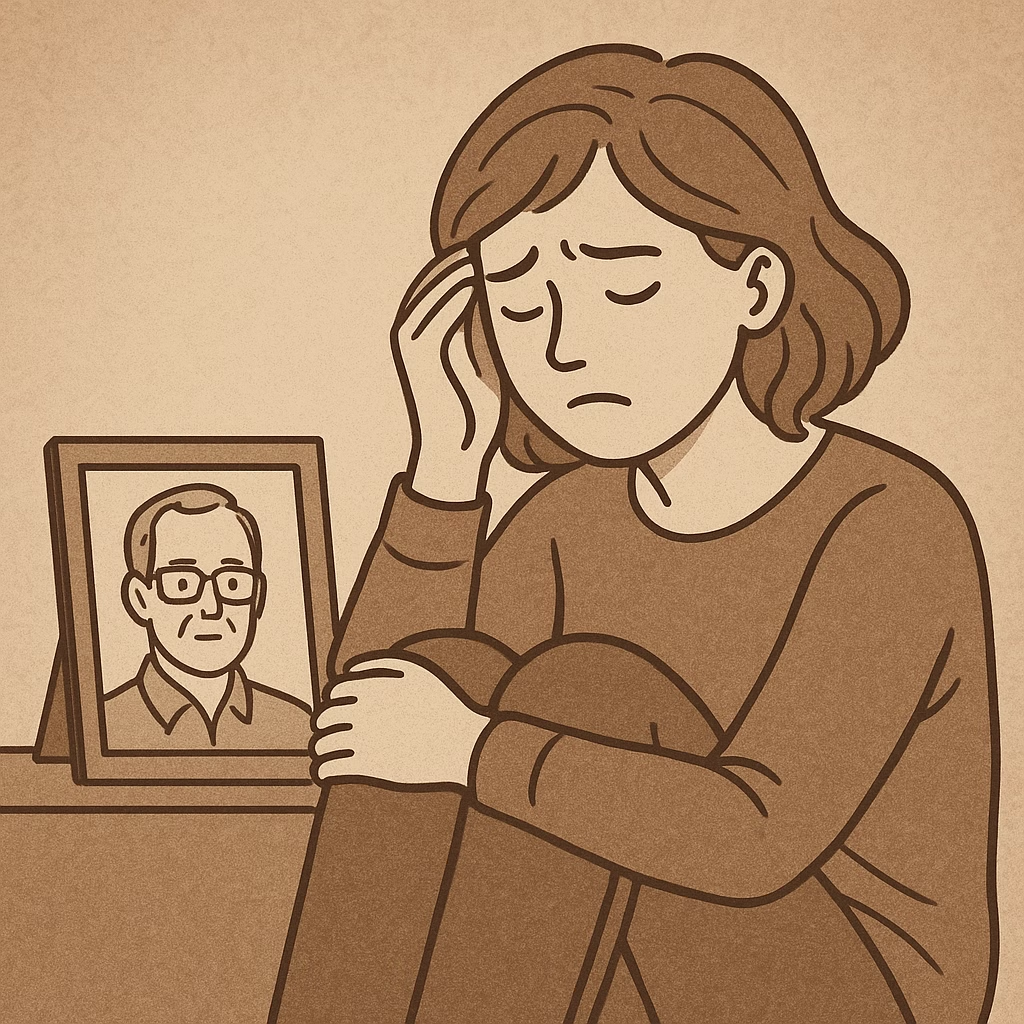
Losing a parent can leave lasting emotional scars. Learn how to care for your mental health after losing a parent through expert-backed coping strategies, professional support, and guidance from Recover All Behavioral Health, offering in-person and telehealth care.
The Deep Impact of Losing a Parent
Losing a parent is one of life’s most profound heartbreaks, a loss that changes everything. No matter your age, the death of a mother or father can feel like losing a part of yourself. They’re often the foundation of our identity, the first source of love and safety. When that presence disappears, it can leave you feeling adrift, vulnerable, and emotionally raw. The grief that follows is complex. It doesn’t just affect your heart, it impacts your mind, body, and spirit. Many people experience symptoms such as:
- Trouble sleeping or eating
- Difficulty concentrating
- Sudden waves of sadness or anger
- Physical exhaustion
- Emotional numbness
This emotional upheaval is a natural reaction. The key is learning how to protect and nurture your mental health after losing a parent with patience, support, and self-compassion. According to the American Psychological Association (APA), grief is not a linear process. It can come and go in waves, triggered by memories, milestones, or even small reminders. The healing journey is personal and it’s okay if yours looks different from others.
Understanding the Stages of Grief
Psychiatrist Elisabeth Kubler-Ross identified five stages of grief, not as a strict order, but as emotional experiences that people often move through over time:
- Denial: Feeling shocked, numb, or unable to believe what happened.
- Anger: Questioning why this happened or feeling frustration toward others or yourself.
- Bargaining: Hoping for things to be different or wishing you’d done something more.
- Depression: Deep sadness, emptiness, or withdrawal from the world.
- Acceptance: Learning to live with the loss and finding meaning again.
Many people cycle between these emotions for months or years. Healing doesn’t mean forgetting. It means learning to coexist with loss in a healthy way.
The Connection Between Grief and Mental Health
Grief and mental health are closely intertwined. While grieving is natural, long-term or unresolved grief can lead to conditions like:
- Major depressive disorder
- Generalized anxiety disorder
- Prolonged grief disorder (when intense grief lasts beyond 12 months)
- Post-traumatic stress disorder (PTSD) in cases of sudden or traumatic loss
These are not signs of weakness. They’re signs that your brain and heart are struggling to adapt to a life-changing event. Taking care of your mental health after losing a parent helps prevent long-term emotional strain and allows you to rebuild stability over time.
Ways to Support Your Mental Health After Losing a Parent
1. Allow Yourself to Feel Everything
Many people try to stay strong for others after losing a parent. But suppressing emotions can delay healing. It’s okay to cry, yell, journal, or sit in silence. Your emotions are valid. Journaling your thoughts, creating art, or writing letters to your parent can help externalize what feels overwhelming inside.
You might feel like nobody understands your pain, but connection can ease the burden. Talk openly with trusted friends, family members, or join a grief support group. Sometimes it’s easier to speak with people who’ve been through a similar loss. Support groups whether online or local remind you that your emotions are normal and shared. Platforms like Grief Share or Facebook grief communities provide safe spaces for sharing stories and encouragement.
3. Seek Professional Support
Therapy can be a powerful tool for managing grief. Licensed therapists, psychiatrists, and grief counselors can help you understand your emotions and develop coping mechanisms. If you’re in or near Florence, South Carolina, or prefer remote care, Recover All Behavioral Health, LLC offers compassionate, professional help, both in-person and via telehealth.
Their team provides:
- Individual therapy
- Psychiatric evaluation
- Medication management
- Behavioral health support for grief, anxiety, and depression
Recover All Behavioral Health’s mission is to meet people where they are, emotionally, mentally, and geographically through flexible telehealth services and in-person care. They understand that healing starts with being heard, validated, and supported.
Real Stories: Healing Through Connection
Many people find comfort in community and shared experiences. One woman who lost her father wrote. Grief can sometimes evolve into depression or severe emotional distress. You might need urgent help if you:
- Feel hopeless or worthless
- Struggle to perform daily tasks
- Experience panic attacks or nightmares
- Withdraw completely from loved ones
- Have thoughts of self-harm
If any of these feelings become overwhelming, reach out for help immediately. In the U.S., call or text 988 to reach the Suicide and Crisis Lifeline, free and available 24/7.
You can also contact Recover All Behavioral Health at 833-643-6660 to connect with mental health professionals who can provide compassionate support and treatment options.
- American Psychological Association. (2023). Grief: Coping with the loss of your loved one. Retrieved from https://www.apa.org
- Worden, J. W. (2018). Grief Counseling and Grief Therapy. Springer Publishing.
- National Institute of Mental Health. (2022). Depression and Loss. Retrieved from https://www.nimh.nih.gov
- Kubler-Ross, E. (1969). On Death and Dying. Scribner.
Disclaimer: The information provided by Recover All Behavioral Health, LLC on this website and blog is for educational and informational purposes only. This content is not intended to serve as medical advice, diagnosis, or treatment recommendations for any mental health condition, including ADHD, anxiety, depression, or bipolar disorder.
Reading this blog does not establish a provider–patient relationship with Recover All Behavioral Health. For personalized mental health care, medication management, or treatment planning, please consult a licensed healthcare provider. If you are experiencing a mental health crisis, please call 911 or dial 988, the Suicide & Crisis Lifeline.